There is a strange thing that happens in fundraising.
We spend weeks—sometimes months—trying to get the gift.
We research the donor.
We cultivate the relationship.
We schedule the coffee.
We reschedule the coffee.
We send the proposal.
We revise the proposal.
We have somebody on the board who “knows them really well” make a phone call.
We pray.
We follow up.
We try not to follow up too much.
And then one glorious Tuesday afternoon, the gift comes in.
$10,000.
Everybody celebrates.
Somebody rings a bell.
The development director sends an email with seventeen exclamation points.
Finance asks what account it goes into.
The board chair replies, “Great work!”
And then…
Silence.
We move on to the next prospect.
That may be one of the biggest mistakes we make in philanthropy.
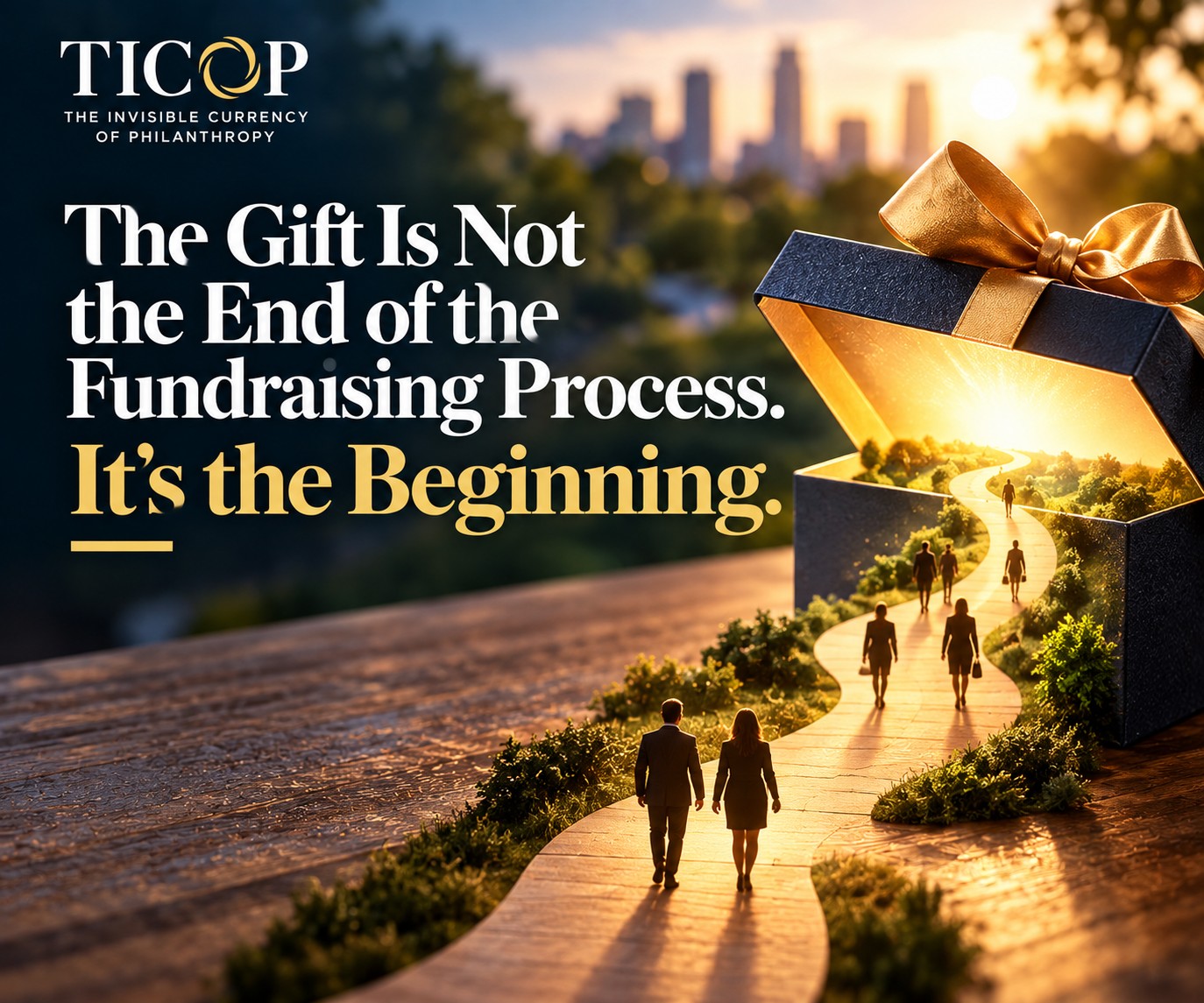
Because the gift was never the finish line.
The gift was the starting line.
The Check Is a Transaction. The Gift Is Something Else.
One of the central ideas behind The Invisible Currency of Philanthropy is that money is rarely the only thing being exchanged when someone gives.
Something much more human is happening.
A donor may be saying:
I believe in this.
I trust you.
This matters to me.
I want to belong to this.
I want to help change something.
Sometimes they are even saying:
This is part of the person I want to become.
That is why I believe philanthropy operates through five invisible currencies:
Belonging.
Trust.
Meaning.
Emotional Return.
Transformation.
The financial gift is simply the visible evidence that one or more of those currencies is already moving.
And that changes the fundraising question.
Instead of asking only: “How do we get people to give?”
We should also be asking: “What happens to the relationship after they do?”
Because apparently, we’re not always doing a great job with that part.
The Retention Numbers Should Get Our Attention
Overall donor retention in 2025, according to the Fundraising Effectiveness Project. Less than half of donors who gave previously were retained — even as charitable dollars grew.
Think about that.
At the same time, charitable dollars increased by about 5%, while the total number of donors actually declined 3.6%. In other words, the sector raised more money from a shrinking pool of people.
That should make every advancement professional sit up a little straighter.
Because you can have a great fundraising year and still be quietly weakening your organization.
Revenue can rise while relationships decline. That is dangerous.
And first-time donors are particularly vulnerable. AFP’s donor-stewardship guidance notes that first-time donor retention has hovered around 19% in recent years.
Which means roughly four out of every five people who make that first gift may never make another one.
Imagine running a restaurant where four out of every five first-time customers never came back.
You probably wouldn’t celebrate how many people came through the door.
You’d want to know what happened after they sat down.
Fundraising shouldn’t be any different.
We Have Become Very Good at the Ask
The nonprofit sector spends enormous energy perfecting solicitation.
Campaign strategy.
Prospect research.
Email sequences.
Giving days.
Direct mail.
Galas.
Peer-to-peer campaigns.
Major gift portfolios.
Text-to-give.
QR codes.
And somewhere, right now, somebody is creating another fundraising thermometer.
Lord help us all.
But the harder question is what happens after somebody says yes.
Too often stewardship becomes administrative.
Receipt.
Thank-you letter.
Newsletter.
Annual report.
Next appeal.
Check. Check. Check. Check. Check.
But stewardship isn’t a checklist.
It is the continuation of a relationship.
The donor didn’t suddenly stop being human when their credit card cleared.
The First Gift Is a Question
I believe every first gift contains an unspoken question:
“Was I right to trust you?”
That’s the real stewardship question.
Not:
Did we send the tax receipt?
Did we add them to Mailchimp?
Did we say thank you?
Those things matter.
But the deeper question is whether your organization continually confirms that the donor made a meaningful decision.
This is where Trust becomes currency.
Show me what happened.
Tell me what changed.
Let me see the people behind the numbers.
Don’t disappear for eight months and then suddenly pop back into my inbox in November like:
“Hey friend! Giving Tuesday is coming!”
Friend?
We haven’t spoken since February.
That’s not friendship. That’s fundraising with commitment issues.
A Thank-You Is Not Stewardship
A thank-you is an event. Stewardship is a relationship. There is a difference.
Good stewardship says:
We noticed you.
We remember you.
Your contribution mattered.
Here is what you helped make possible.
You are part of this story.
And notice something important. None of those statements asks for money.
That’s where many organizations get uncomfortable. We have trained ourselves to communicate with donors primarily when we need something.
But relationships cannot survive if every conversation contains an invoice.
Sometimes the most strategic fundraising communication you can send is the one that asks for absolutely nothing.
Give People Their Emotional Return
One of my favorite Invisible Currencies is Emotional Return.
We understand financial return. You invest something. You receive something back.
Philanthropy works similarly, except the return is often emotional.
A donor experiences joy.
Hope.
Pride.
Connection.
Gratitude.
Legacy.
Purpose.
The feeling that somehow, because they participated, the world moved a little closer to what they believe it should be.
That’s powerful. And organizations should become much better at delivering that return.
Send the photograph.
Tell the small story.
Make the unexpected phone call.
Let the student write the note.
Let the executive director call without making an ask.
Send the 45-second video from the program.
Tell donors what happened on a random Wednesday because they helped make it possible.
Not everything needs to be a professionally produced impact report. Sometimes:
“You helped make this happen today.”
is enough.
Move Donors From Contribution to Belonging
The strongest donor relationships eventually cross an invisible threshold.
The donor stops saying: “That’s an organization I support.”
And starts saying: “That’s one of my organizations.”
Two very different statements. One represents contribution. The other represents Belonging.
When somebody believes they belong to the mission, you no longer have only a donor.
You have an advocate.
An ambassador.
A connector.
A volunteer.
A storyteller.
Sometimes a future board member.
And frequently, a lifelong giver.
This is where fundraising becomes something bigger than raising money. You are building a community of people who share an idea about what is possible.
Meaning Is the Real Product
People don’t give because your organization needs money. Every nonprofit needs money. That isn’t particularly interesting.
People give because your work intersects with something they find meaningful.
A child reminds them of themselves.
A scholarship reminds them of the teacher who believed in them.
Cancer research reminds them of their mother.
A food pantry reminds them of the season when their own family struggled.
An arts organization reminds them that beauty matters.
A church reminds them where they found hope.
Behind almost every meaningful gift is a story. Your job is to discover where your organization’s story intersects with the donor’s story.
That intersection is where Meaning lives.
And when you understand that, stewardship becomes much easier. You stop sending generic communications to a database. You start continuing a story with a person.
Transformation Is the Highest Currency
At its very best, philanthropy changes both sides of the transaction.
The recipient is changed.
The community is changed.
The organization is changed.
But something can happen to the giver too.
They become more generous.
More connected.
More hopeful.
More convinced that their life can make a difference.
That’s Transformation.
And I think we sometimes underestimate how powerful that is. The best fundraising doesn’t simply convince someone to support a mission. It allows people to see themselves as part of the kind of world they want to create.
That is a much bigger invitation.
So What Happens After the Gift?
Here’s a question I would encourage every advancement team to discuss at its next meeting:
What do donors experience during the 12 months after they give? Not what do you send them. What do they experience?
There is a difference.
Do they experience belonging?
Do they experience trust?
Do they experience meaning?
Do they experience emotional return?
Do they experience transformation?
Or do they experience:
Receipt.
Newsletter.
Newsletter.
Newsletter.
Giving Tuesday appeal.
Year-end appeal.
Because if that’s the journey, we shouldn’t be shocked when retention struggles.
The Real Fundraising Cycle
For years we’ve talked about fundraising as:
Identify. Cultivate. Solicit. Steward. Repeat.
I think we need to think about it differently.
Relationship.
Meaning.
Invitation.
Gift.
Deeper relationship.
Greater meaning.
Greater impact.
And somewhere inside that cycle another gift may happen. Maybe a larger one. But the relationship remains the center.
Because philanthropy was never really about extracting generosity. It was about creating the conditions where generosity could grow.
The Gift Is the Beginning
When someone gives to your organization, don’t just record the transaction.
Recognize the moment.
A human being just decided that something you care about is important enough for them to participate in.
That’s not the end of fundraising. That’s an invitation.
An invitation to build trust.
Deepen belonging.
Create meaning.
Deliver emotional return.
And perhaps even participate in transformation.
The organizations that understand this won’t simply raise more money. They will build stronger communities around their missions.
And in an era when fewer donors are carrying more of philanthropy’s financial weight, those relationships have never mattered more.
So yes, celebrate the gift.
Ring the bell.
Send the Slack message.
Use all seventeen exclamation points if you must.
But tomorrow morning?
Get back to the relationship.
Because the gift wasn’t the end.
It was the beginning.